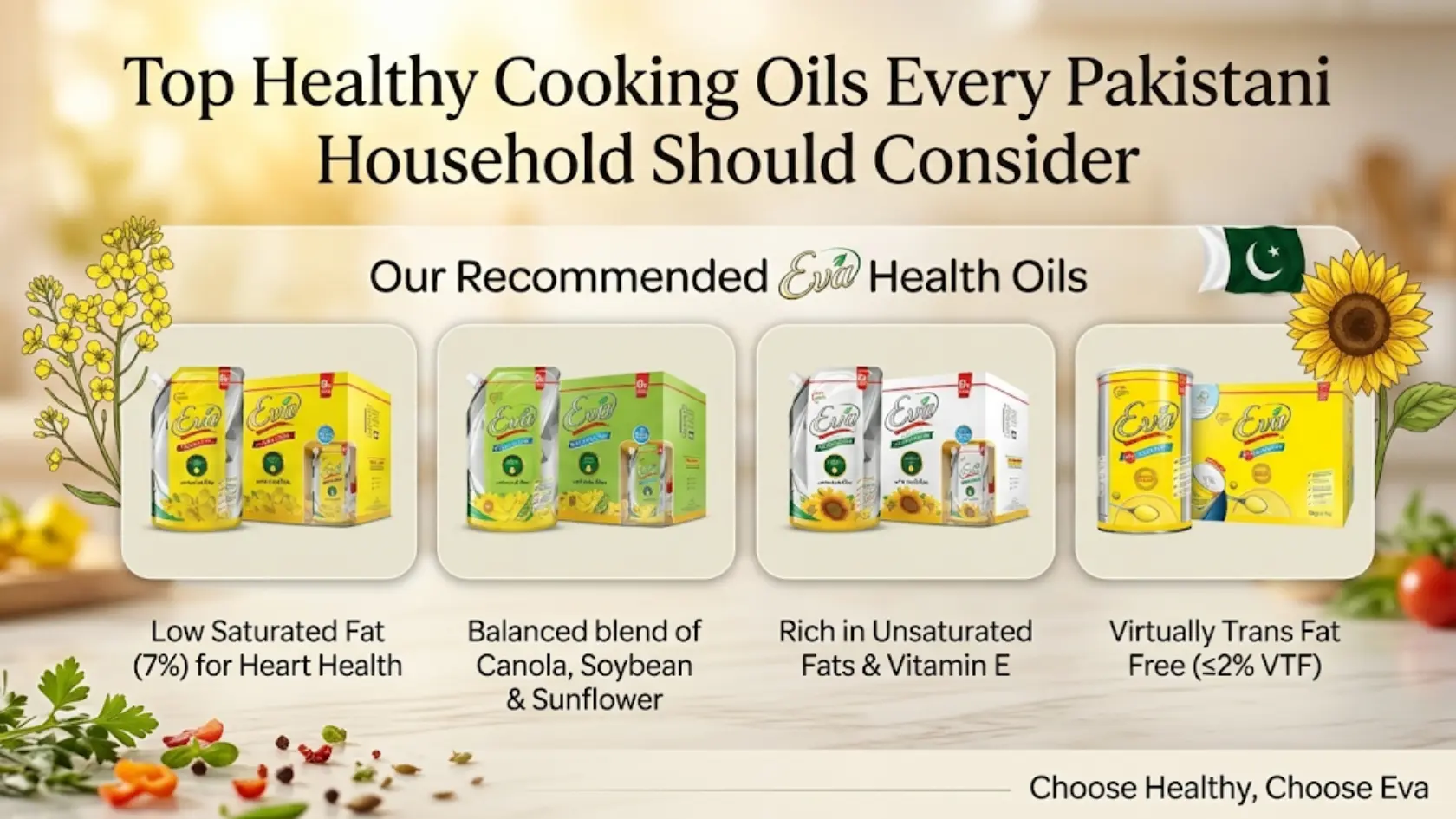
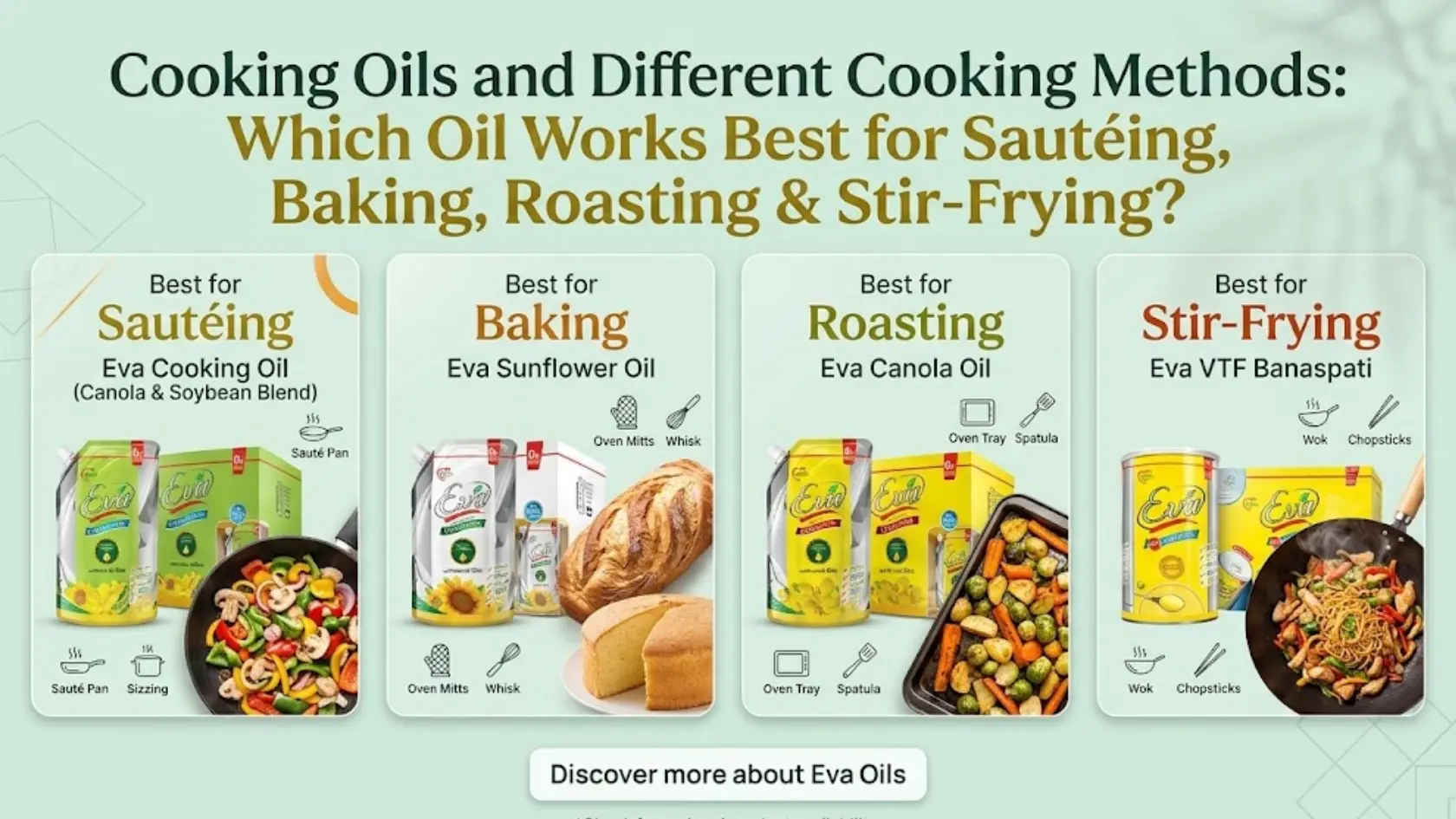
The best oil depends on the heat and the texture you need. Use canola oil for sautéing and baking, sunflower oil or a canola-blend cooking oil for roasting and stir-frying, and banaspati for flaky bakes and traditional desi sweets.
- Sautéing: Eva Canola Oil – neutral taste, low saturated fat, stable at medium-high heat.
- Baking: Eva Canola Oil for cakes and muffins; Eva VTF Banaspati for biscuits, nan khatai and flaky pastry.
- Roasting: Eva Sunflower Oil or Eva Cooking Oil – high smoke point for 200-220°C ovens.
- Stir-frying: Eva Sunflower Oil or Eva Cooking Oil – handles fast, very hot wok cooking.
- Deep-frying: Eva Cooking Oil – a balanced blend built for everyday frying.
Most home cooks use one oil for everything. That habit costs flavor, texture and sometimes nutrition. An oil pushed past its limit smokes, turns bitter and breaks down. This guide explains how oils behave at each heat level, so you can pick the right bottle every time.
What You’ll Learn
- What smoke point, fat profile and stability mean in a real kitchen
- Which oil suits sautéing, baking, roasting, stir-frying and deep-frying
- How the Eva range fits Pakistani and everyday cooking
- How to store, reuse and handle oil safely
How to Choose a Cooking Oil: 4 Factors That Matter
Four properties decide how an oil performs: smoke point, fat profile, flavor and oxidative stability. Check all four, not just one.
1. Smoke Point
Smoke point is the temperature at which an oil starts to smoke and break down. Past this point, oil forms bitter compounds and free radicals. Refined oils usually have higher smoke points than unrefined ones. Match the smoke point to your method: sautéing runs around 160-190°C, while stir-frying and roasting can pass 200°C.
2. Fat Profile
Every oil mixes three fat types:
- Saturated fat – stable under heat, but high intake is linked to raised LDL cholesterol.
- Monounsaturated fat (MUFA) – heat-stable and heart-friendly. Canola oil is rich in it.
- Polyunsaturated fat (PUFA) – includes omega-3 and omega-6. Essential, but more prone to oxidation at very high heat.
Trans fat is the one to minimise. The World Health Organization recommends keeping trans fat below 1% of daily energy intake.
3. Flavor
Neutral oils such as canola, sunflower and soybean let spices and ingredients lead. That makes them ideal for cakes, curries and stir-fries where you don’t want an oily aftertaste.
4. Oxidative Stability
Stability is how well an oil resists breaking down with heat, light and air. Oils high in MUFA and natural antioxidants such as vitamin E (alpha-tocopherol) hold up better over a cooking session.
Cooking Oil Comparison Chart: Which Oil for Which Method?
Refined canola, sunflower and blended cooking oils cover almost every home cooking method. Banaspati fills the gap where a solid fat gives better texture.
| Oil | Approx. smoke point (refined) | Key fat trait | Flavor | Best for | Eva product |
| Canola oil | 204-230°C (400-450°F) | ~7% saturated fat; rich in MUFA and omega-3 (ALA) | Neutral | Sautéing, baking, shallow-frying, dressings | Eva Canola Oil |
| Sunflower oil | 225-232°C (440-450°F) | High in unsaturated fat; rich in vitamin E | Light, neutral | Stir-frying, roasting, frying | Eva Sunflower Oil |
| Canola + soybean/sunflower blend | 220-230°C (430-450°F) | Balanced MUFA, PUFA, omega-3 and omega-6 | Neutral | Daily curries, deep-frying, stir-frying | Eva Cooking Oil |
| VTF banaspati (vegetable ghee) | ~200-230°C (390-450°F) | Solid at room temperature; 2% or less trans fat | Rich, ghee-like | Flaky baking, parathas, halwa, mithai, traditional frying | Eva VTF Banaspati |
Smoke points vary by refining grade and freshness. Treat these as typical ranges, not exact limits.
Best Oil for Each Cooking Method
What Is the Best Oil for Sautéing?
Canola oil is the best all-round oil for sautéing. Sautéing cooks food quickly in a little oil at medium-high heat, about 160-190°C. Canola’s neutral taste and high MUFA content keep it stable well within that range.
Use it for: onions for a masala base, garlic and ginger, vegetables, chicken strips, eggs.
Tips:
- Heat the pan first, then add oil. It should shimmer, not smoke.
- Use 1-2 tablespoons per pan. Sautéing needs a thin coat, not a pool.
- Don’t overcrowd the pan, or food steams instead of browning.
Eva pick: Eva Canola Oil.
What Is the Best Oil for Baking?
For moist cakes, use a neutral liquid oil such as canola; for flaky or crumbly bakes, use a solid fat such as banaspati. Oil inside a batter rarely exceeds 100°C, so flavor and texture matter more than smoke point.
- Cakes, muffins, brownies, banana bread: canola oil keeps the crumb soft and moist for days.
- Biscuits, nan khatai, puff pastry, pie crust: a solid fat traps air and creates layers and a short, crumbly bite.
- Greasing tins: a light brush of canola or sunflower oil works well.
Substitution rule: replace 1 cup of melted butter with about ¾ cup of oil.
Eva picks: Eva Canola Oil for cakes; Eva VTF Banaspati for biscuits, bakery-style nan khatai and flaky dough.
What Is the Best Oil for Roasting?
Sunflower oil or a refined cooking oil blend is best for roasting. Oven roasting usually runs at 200-220°C. You need an oil with a smoke point comfortably above that.
Use it for: roast chicken, potatoes, cauliflower, tandoori-style fish, oven-baked tikka.
Tips:
- Toss vegetables in oil in a bowl rather than pouring oil on the tray. You’ll use less.
- Spread food in a single layer for crisp edges.
- Mix oil with spices first so the masala sticks evenly.
Eva picks: Eva Sunflower Oil or Eva Cooking Oil.
What Is the Best Oil for Stir-Frying?
Use a high-smoke-point neutral oil such as sunflower oil or a canola blend for stir-frying. Stir-frying tosses food over very high heat, often above 200°C. Low-smoke-point oils burn and turn bitter here.
Use it for: chicken chow mein, vegetable stir-fry, fried rice, chilli chicken, Chinese-style prawns.
Tips:
- Prep everything before you heat the wok. Stir-frying moves fast.
- Swirl oil around the wok’s sides once it is hot.
- Cook in batches so the wok stays hot.
Eva picks: Eva Sunflower Oil or Eva Cooking Oil.
What Is the Best Oil for Deep-Frying?
A stable, neutral, high-smoke-point oil such as a refined cooking oil blend is best for deep-frying. Deep-frying runs at 175-190°C for long periods, so stability matters as much as smoke point.
Use it for: samosas, pakoras, fries, broast, jalebi, puri.
Tips:
- Use a thermometer. At 175-180°C, food absorbs less oil.
- Fry in small batches to keep the temperature steady.
- Drain on a wire rack or paper towel.
Eva picks: Eva Cooking Oil for everyday frying; Eva VTF Banaspati for a traditional taste in puri and mithai.
What About Desi Methods: Bhunai, Tarka and Dum?
- Bhunai (browning masala): long, medium-high cooking. Canola or a cooking oil blend stays stable and lets spices shine.
- Tarka (tempering): a quick burst of hot oil with cumin, garlic or curry leaves. Any neutral oil works; banaspati gives a richer aroma.
- Dum (slow steam-cooking): low heat, so choose on taste. Banaspati adds a traditional ghee note to biryani and pulao.
The Eva Range: One Oil for Every Method
Eva offers four products that together cover every cooking method in a home kitchen.
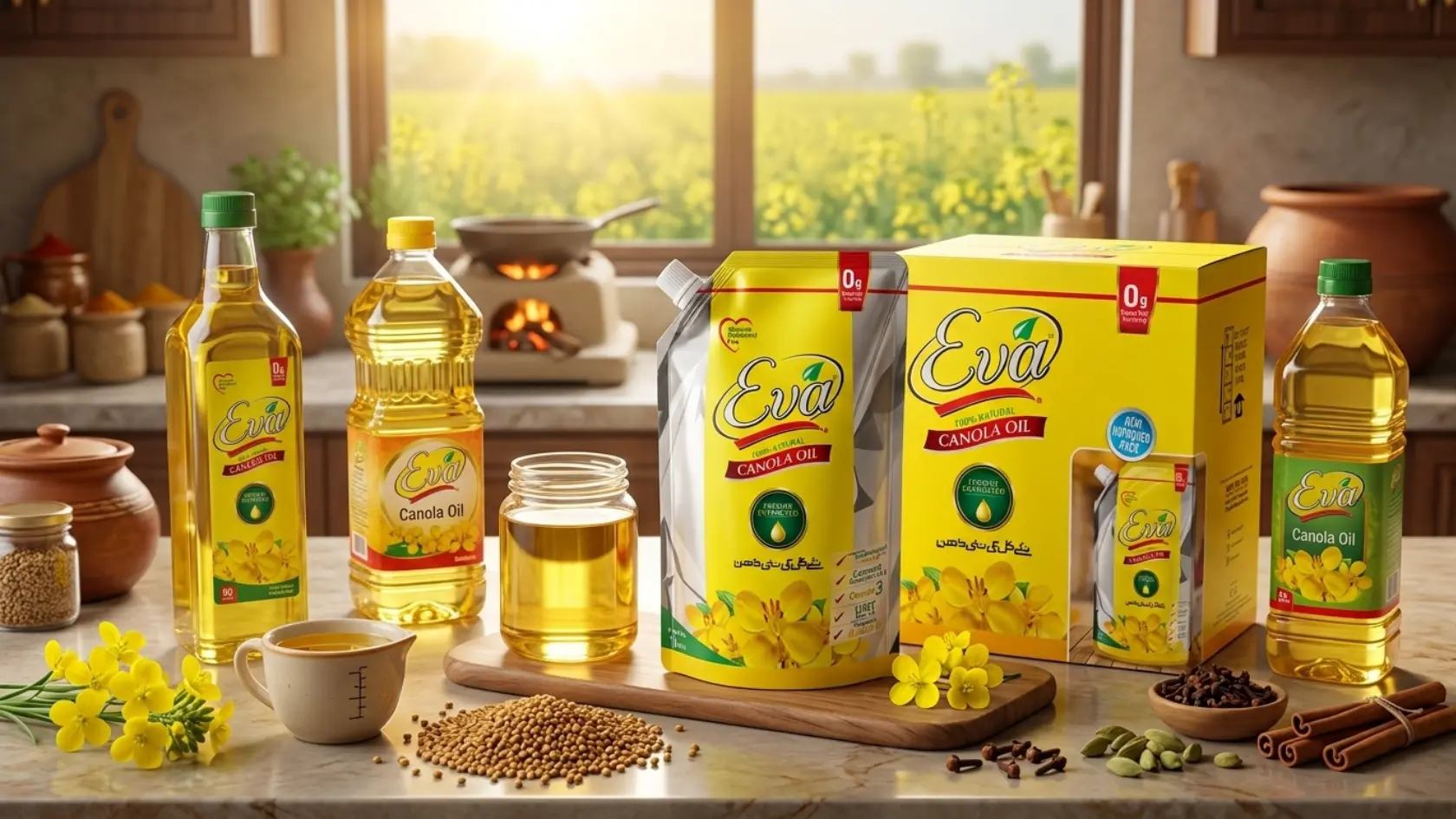
Eva Canola Oil – for Sautéing, Baking and Light Frying
Eva Canola Oil contains only 7% saturated fat and is rich in healthy unsaturated fats that may help support heart health. Its neutral taste makes it the go-to for cakes, sautéed vegetables and salad dressings.
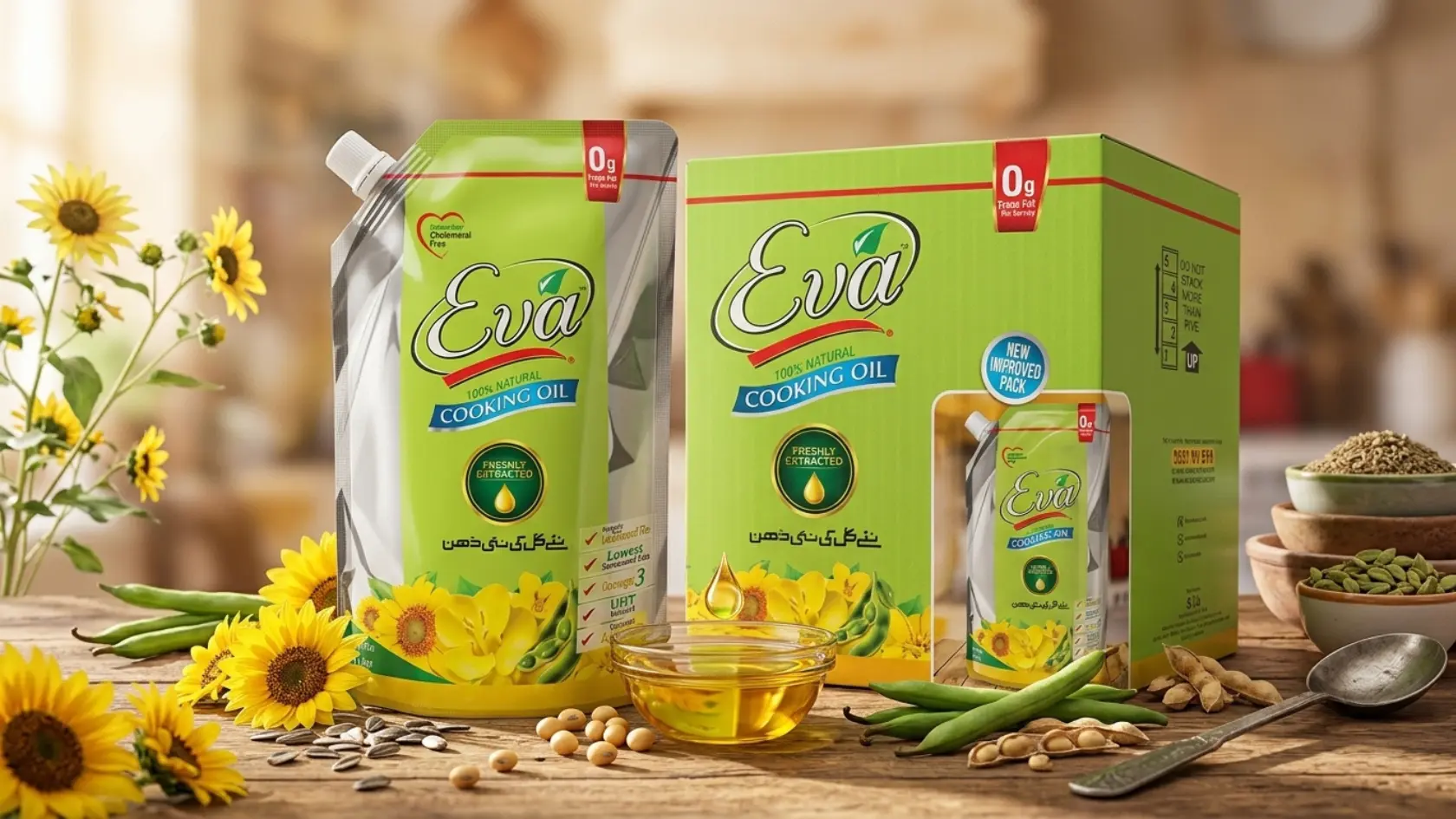
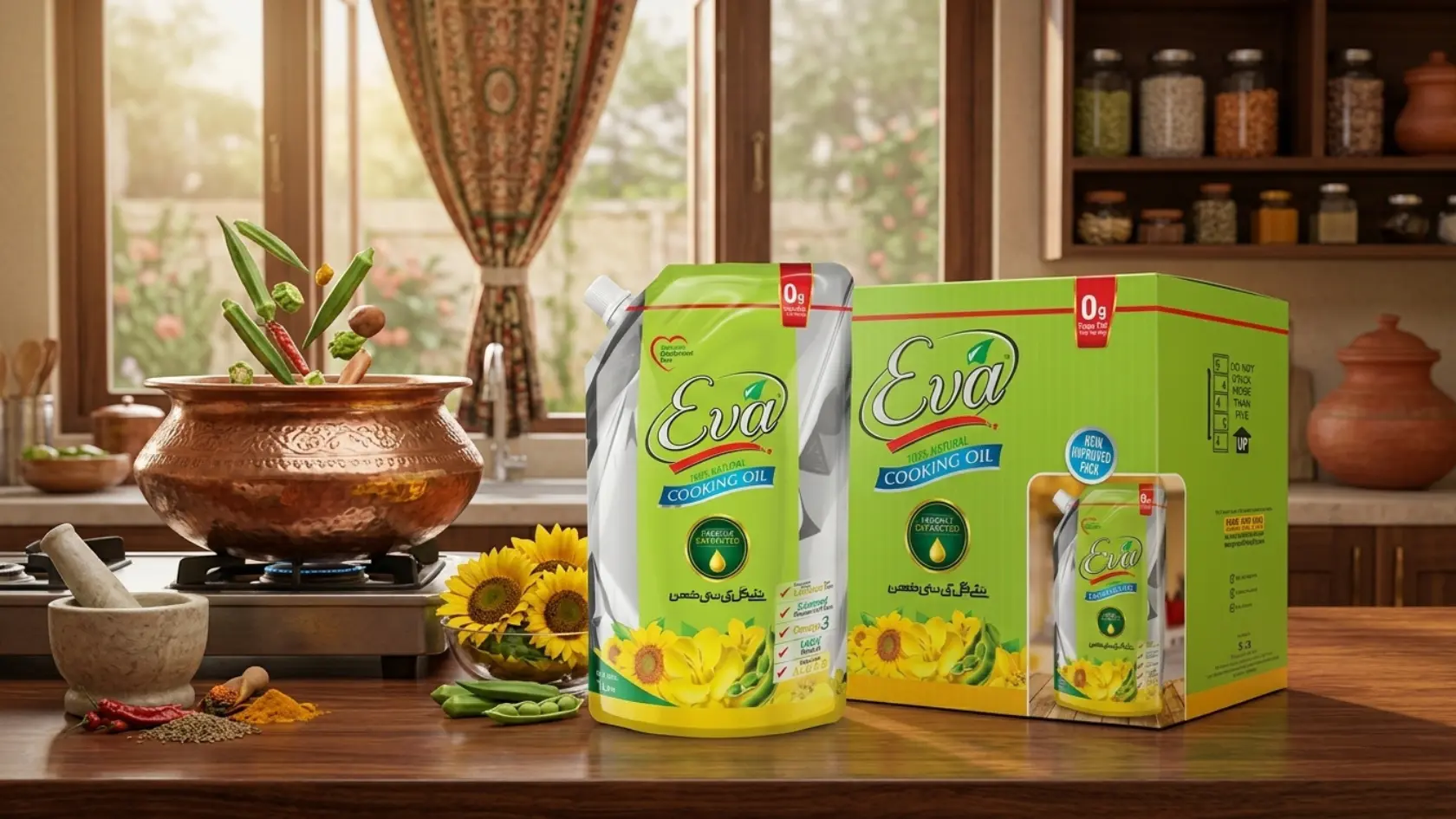
Eva Cooking Oil – for Everyday Curries and Frying
Eva Cooking Oil is a blend of canola and soybean/sunflower oils. Blending balances the fat profile and gives dependable performance for daily salan, karahi and deep-frying.
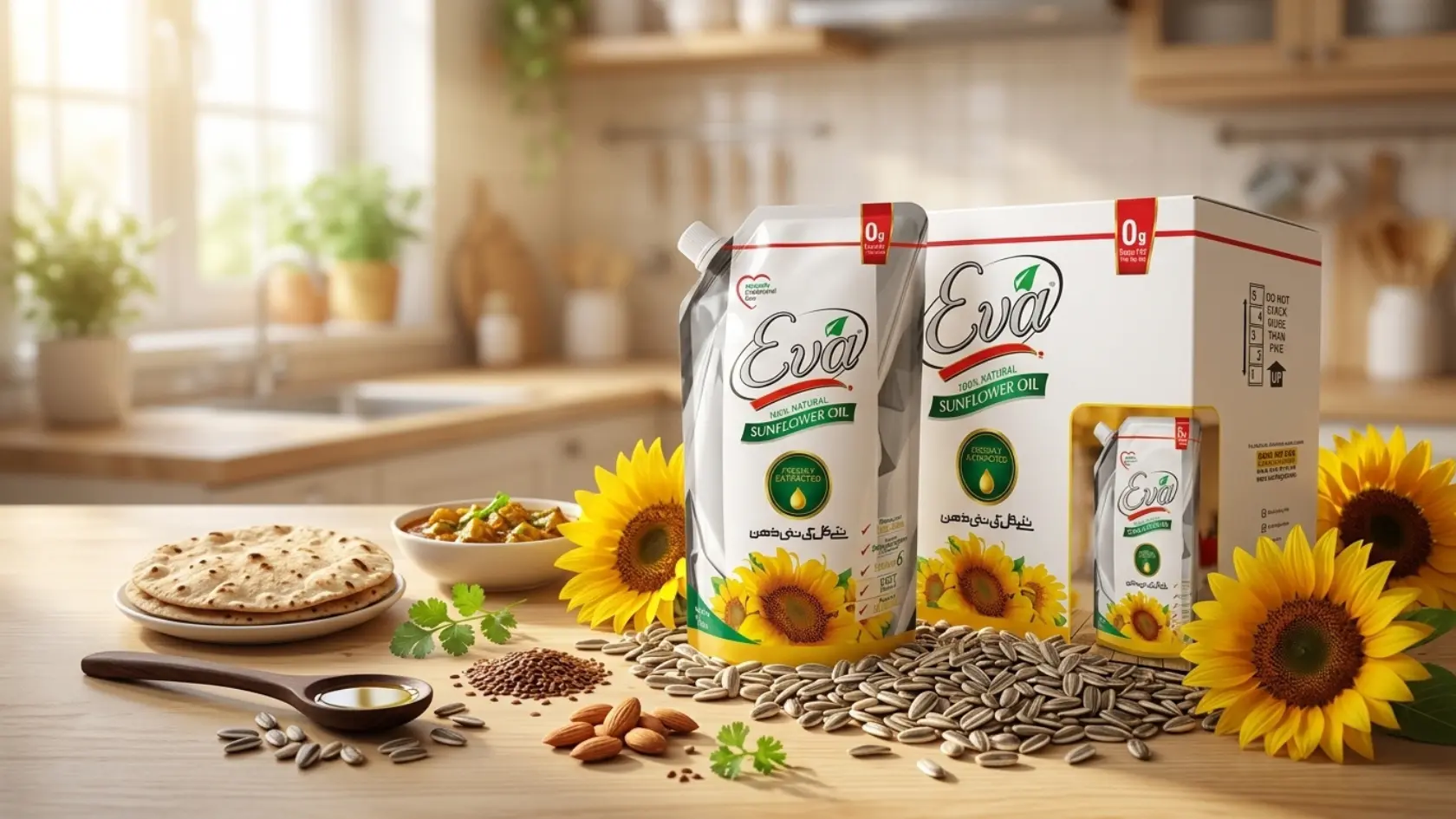
Eva Sunflower Oil – for Stir-Frying and Roasting
Eva Sunflower Oil is rich in unsaturated fats and vitamin E (alpha-tocopherol), a powerful antioxidant. Its light taste and high smoke point suit hot woks and hot ovens.
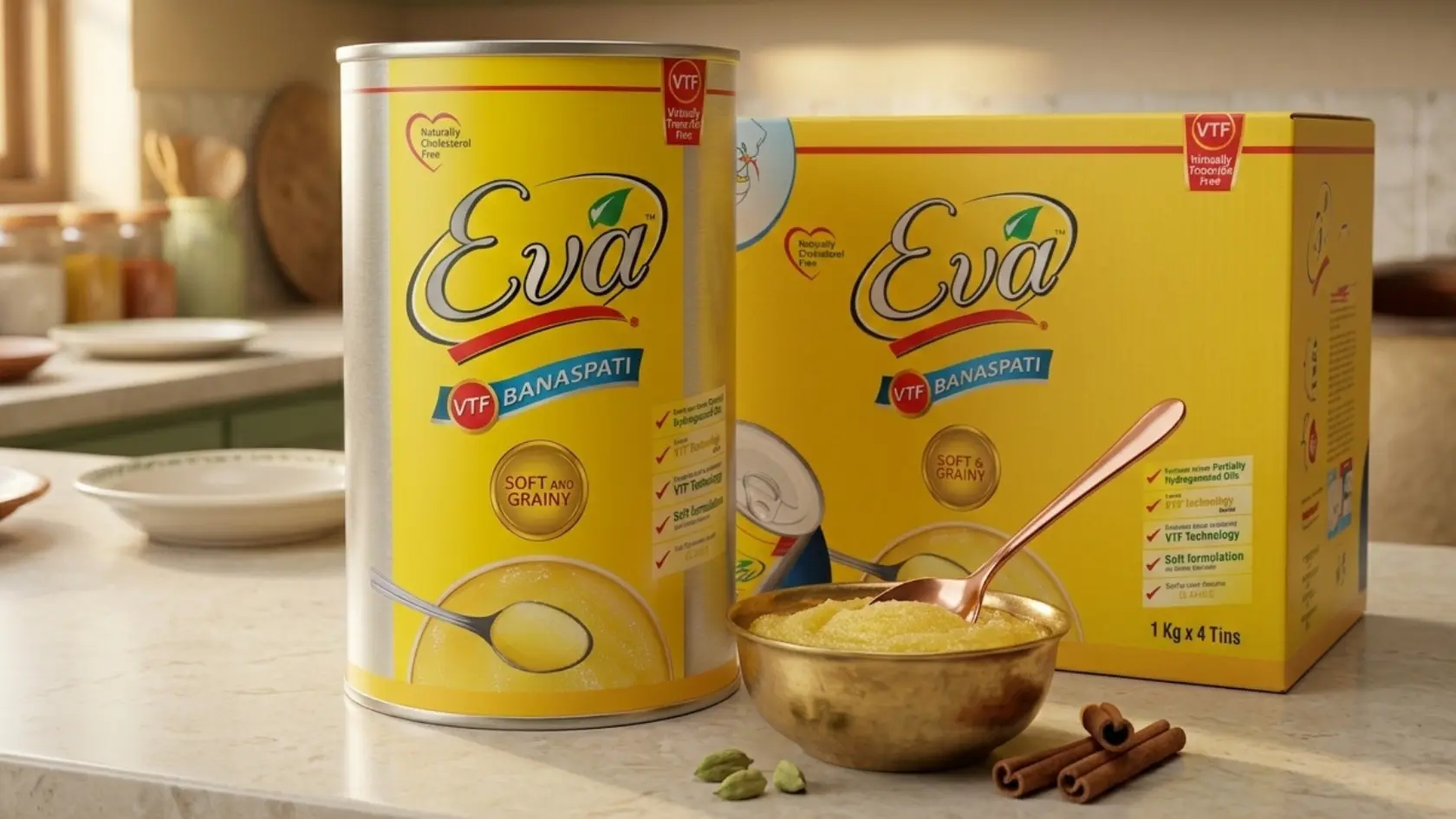
Eva VTF Banaspati – for Flaky Baking and Traditional Dishes
Eva VTF Banaspati is a “Virtually Trans Fat Free” product, meaning it contains 2% or less trans fat. It gives parathas, halwa, mithai and bakery biscuits their traditional richness and texture.
Quick Picker: Which Eva Product Should I Buy?
| If you mostly cook… | Choose |
| Cakes, sautés, eggs, light meals | Eva Canola Oil |
| Daily curries, karahi, deep-fried snacks | Eva Cooking Oil |
| Stir-fries, roasts, fried rice | Eva Sunflower Oil |
| Parathas, halwa, biscuits, mithai | Eva VTF Banaspati |
Many families keep two: a liquid oil for daily cooking and banaspati for special dishes.
Storage, Reuse and Kitchen Safety
Store oil sealed, cool and dark, and don’t reuse frying oil more than 2-3 times. Heat, light and air all speed up oxidation.
How to Store Cooking Oil
- Keep the cap tightly closed after each use.
- Store away from the stove, sunlight and humidity.
- Use opened packs within 3-6 months for the best taste.
- Banaspati keeps well at room temperature; use a clean, dry spoon every time.
Can You Reuse Frying Oil?
Yes, a few times, if you handle it well. Strain it through a fine sieve once cool. Store it sealed and use it for similar foods. Discard it if it smells rancid, looks dark and thick, foams, or smokes at normal frying heat.
5 Common Cooking Oil Mistakes
- Heating oil until it smokes. Smoke means the oil is breaking down. Lower the heat and start again.
- Using one oil for everything. Match the oil to the heat and texture you need.
- Adding food to cold oil. Food soaks up oil and turns greasy.
- Overcrowding the pan. The temperature drops and food steams.
- Pouring water on an oil fire. Never do this. Turn off the heat and cover the pan with a lid or damp cloth.
Customer FAQs
Q1. Which cooking oil is healthiest for everyday use?
Oils low in saturated fat and rich in unsaturated fat, such as canola and sunflower oil, are good everyday choices. Canola oil has about 7% saturated fat plus omega-3. Use moderate amounts and rotate oils for a wider range of nutrients.
Q2. What is the smoke point of canola oil?
Refined canola oil has a smoke point of roughly 204-230°C (400-450°F). That makes it suitable for sautéing, baking, shallow-frying and most everyday cooking.
Q3. Is sunflower oil good for high-heat cooking?
Yes. Refined sunflower oil has a smoke point of about 225-232°C (440-450°F). It suits stir-frying, roasting and frying. It is also a natural source of vitamin E, an antioxidant.
Q4. Can I use canola oil for baking?
Yes. Canola oil is one of the best oils for baking cakes, muffins and brownies. Its neutral taste won’t overpower flavors, and it keeps baked goods moist. Replace 1 cup of melted butter with about ¾ cup of oil.
Q5. Which oil is best for deep-frying pakoras and samosas?
A refined, neutral oil with a high smoke point works best, such as a canola-soybean or canola-sunflower blend. Fry at 175-180°C so food turns crisp and absorbs less oil. Eva Cooking Oil is made for this kind of daily frying.
Q6. What is the difference between cooking oil and banaspati?
Cooking oil is liquid at room temperature. Banaspati is a vegetable fat that stays semi-solid, like ghee. Banaspati gives flaky, rich textures in parathas, halwa and biscuits. Choose a virtually trans fat free option, such as Eva VTF Banaspati.
Q7. What does “Virtually Trans Fat Free” mean?
It means the product contains 2% or less trans fat. Trans fats raise LDL cholesterol and lower HDL, so health bodies such as the WHO advise keeping intake as low as possible.
Q8. Is it safe to reuse cooking oil?
You can reuse frying oil 2-3 times if you strain it and store it sealed. Discard it if it darkens, thickens, smells rancid or smokes at normal heat. Reused oil breaks down faster each time.
Q9. What oil is best for stir-frying?
Use a neutral oil with a high smoke point, such as refined sunflower oil or a canola blend. Stir-frying often passes 200°C, so low-smoke-point oils can burn and taste bitter.
Q10. Should I use different oils for different cooking methods?
Yes, if you can. Each method uses a different heat level and needs a different texture. A practical setup is one liquid oil for daily cooking and banaspati for traditional or flaky dishes.
Conclusion: Match the Oil to the Method
The right oil makes food taste better and cook more evenly. Canola oil leads for sautéing and cake baking. Sunflower oil and blended cooking oils handle the high heat of roasting, stir-frying and deep-frying. Virtually trans fat free banaspati brings flaky, traditional texture to parathas, halwa and biscuits.
Keep heat below the smoke point, store oil well, and don’t overuse frying oil. Small habits like these protect both flavor and health.
Cook Every Method Better with Eva
From a quick morning sauté to a festive batch of samosas, there’s an Eva oil made for it. Explore Eva Canola Oil, Eva Cooking Oil, Eva Sunflower Oil and Eva VTF Banaspati and find the right match for your kitchen. Explore Eva recipes →