You can safely reuse cooking oil 2 to 3 times for frying, provided you strain it after each use, store it airtight in a cool, dark place, and never let it overheat past its smoke point. Throw it away if it turns dark and thick, smells rancid or fishy, foams heavily, or starts smoking at normal frying temperatures.
In most homes, especially after preparing pakoras, samosas, or fried fish, there’s a pan of leftover oil and the same question: keep it or throw it away? Reusing oil saves money, but reusing it the wrong way can affect both the taste of your food and your family’s health. This guide explains exactly how to reuse cooking oil safely, how many times is too many, and the clear signs that it’s time to let it go.
Can You Reuse Cooking Oil?
Yes, cooking oil can be reused safely a limited number of times if it is handled correctly. Oil used for deep frying at the right temperature, strained to remove food particles, and stored properly can be used again for similar cooking. However, every heating cycle breaks the oil down further, so reuse always has a limit.
The key factors that decide whether oil is reusable are:
- What you fried in it. Plain vegetables and potatoes are gentle on oil. Breaded, battered, and marinated foods, and especially fish, degrade oil much faster.
- How hot it got. Oil heated past its smoke point breaks down rapidly and should not be reused.
- How long it was heated. Longer frying sessions cause more oxidation.
- How it was stored. Light, air, heat, and moisture all speed up spoilage.
How Many Times Can You Reuse Cooking Oil?
Most food safety guidance recommends reusing cooking oil no more than 2 to 3 times. Oil used for clean frying (such as chips or vegetables) may last up to 3 uses, while oil used for battered foods, meat, or fish should be reused only once or discarded.
| What You Fried | Recommended Reuses | Notes |
| French fries, potatoes, plain vegetables | Up to 3 times | Cleanest frying; strain well |
| Pakoras, samosas, battered snacks | 1–2 times | Flour and gram flour (besan) particles burn and darken oil |
| Chicken, meat, kebabs | 1–2 times | Absorbs animal fat and flavor |
| Fish and seafood | Once or discard | Strong odor transfers to other foods |
| Oil that smoked or burned | Do not reuse | Discard immediately |
Important: The number of reuses is a guideline, not a guarantee. Always check the oil’s condition before each use using the signs listed below.
What Happens to Oil When You Reheat It?
Every time oil is heated, three chemical processes break it down:
- Oxidation. Oxygen reacts with the fats, especially polyunsaturated fats, producing compounds that cause rancid flavors.
- Hydrolysis. Water from food splits fats into free fatty acids, which lower the oil’s smoke point, so it begins smoking at lower temperatures each time.
- Polymerization. Broken-down fat molecules link together, making oil thicker, stickier, and darker.
Together, these processes increase the level of total polar compounds (TPC), the main scientific measure of frying oil degradation. Several food regulators, including India’s FSSAI, set a limit of 25% TPC for frying oil, after which it must be discarded. In many European countries, the limit is set between 24% and 27%.
Is Reusing Cooking Oil Bad for Your Health?
Reusing cooking oil a few times with proper care is generally considered acceptable, but repeatedly reheated, degraded oil can be harmful. Research has linked heavily reused oil to the formation of harmful compounds that may contribute to inflammation, oxidative stress, and increased risk of heart disease over time.
When oil is overused, it can form:
- Aldehydes: toxic compounds produced when oil oxidizes at high heat
- Trans fats: small amounts can form during repeated high-temperature heating
- Free radicals: unstable molecules that contribute to oxidative stress in the body
- Acrylamide: can form in starchy foods fried at high temperatures in degraded oil
Street-food vendors who fry in the same oil for days are a common example of unsafe reuse. At home, you control the process, which makes safe reuse realistic.
How to Reuse Cooking Oil Safely: Step-by-Step
Follow these seven steps every time you plan to reuse frying oil:
- Fry at the right temperature. Keep oil between 160°C and 180°C (320°F–356°F). Never let it smoke.
- Let it cool completely. Hot oil is a burn and fire hazard. Wait until it reaches room temperature.
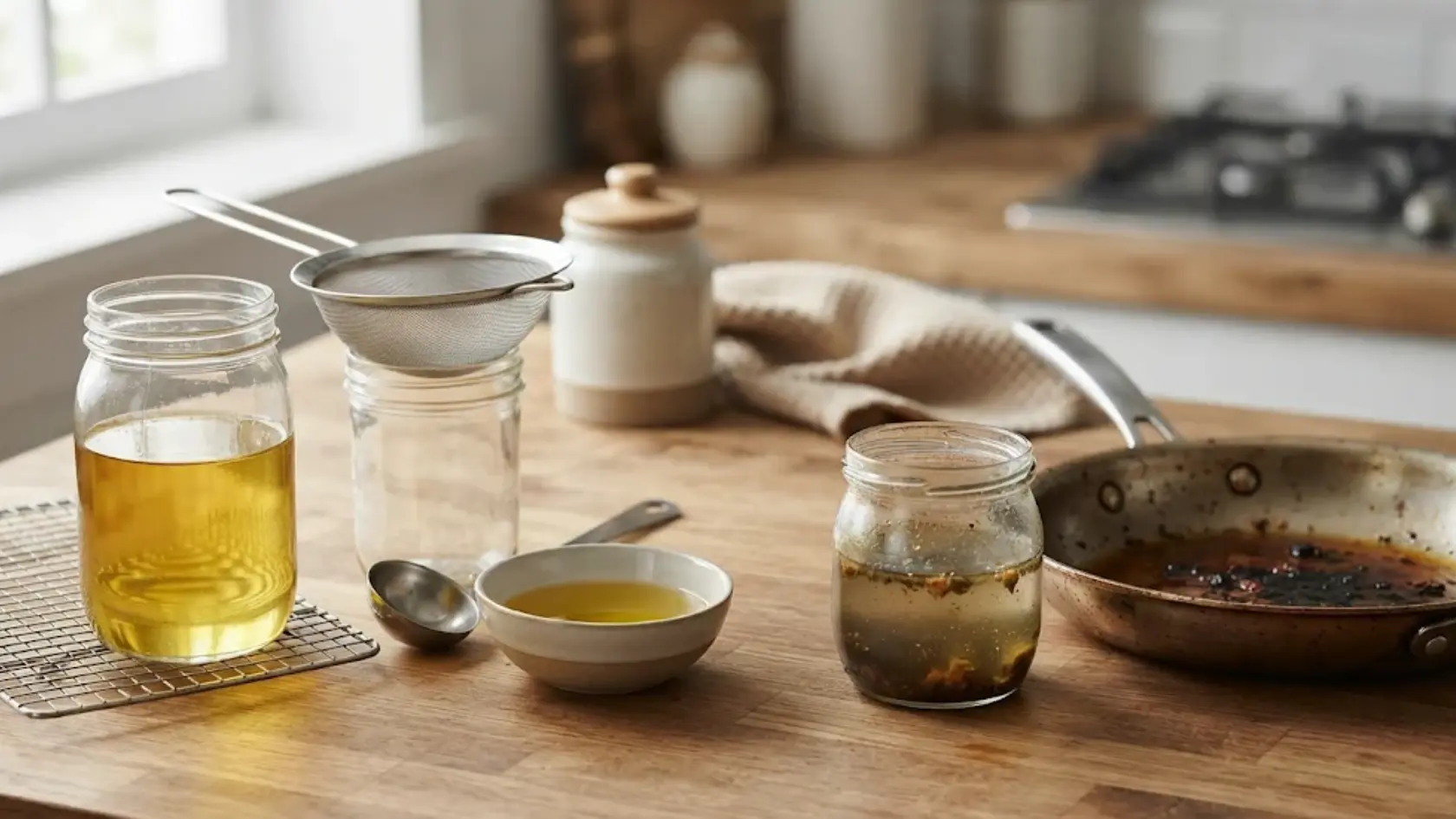
- Strain it thoroughly. Pour it through a fine-mesh strainer lined with a cotton cloth, muslin, or coffee filter to remove crumbs and batter.
- Remove moisture. Water accelerates spoilage. Let any water settle, then pour the oil off carefully.
- Store in an airtight container. Use a clean, dry glass jar or stainless steel container with a tight lid.
- Label it. Write the date and what you fried (e.g., “Fish – 12 Oct”) so you don’t use fish oil for sweets.
- Inspect before reusing. Check color, smell, and texture every time before heating.
Pro tip: Reuse oil for similar foods. Oil from frying fish or onions is best reserved for savory dishes, not for mithai or sweet snacks.
How to Store Used Cooking Oil
Store used cooking oil in an airtight, opaque or dark glass container in a cool, dark place, away from the stove, and use it within 1 month. Refrigerating strained oil can extend its usable life, although it may turn cloudy. This is normal and clears at room temperature.
- Avoid: plastic containers that aren’t heat-safe, open bowls, storing near the stove or in sunlight
- Don’t mix: Never top up old oil with fresh oil. The degraded compounds in the old oil speed up the breakdown of the new oil.
- Keep sealed: Air exposure causes oxidation even when oil isn’t being heated.
7 Signs Your Cooking Oil Should Be Thrown Away
Throw away cooking oil if it shows any of these signs:
- Dark color: It has turned deep brown or nearly black.
- Thick or sticky texture: It feels gummy or syrupy instead of fluid.
- Rancid smell: It smells sour, fishy, soapy, or like old paint.
- Excessive foaming: Foam forms on the surface when heating and doesn’t settle.
- Smoking at low heat: It starts smoking before reaching normal frying temperature.
- Off-taste in food: Fried food tastes bitter, stale, or greasy.
- Visible residue or cloudiness at room temperature: This can indicate contamination or mold, especially if water was left in it.
When in doubt, throw it out. The small cost of fresh oil is always worth your family’s health.
Which Oils Are Best for Reusing?
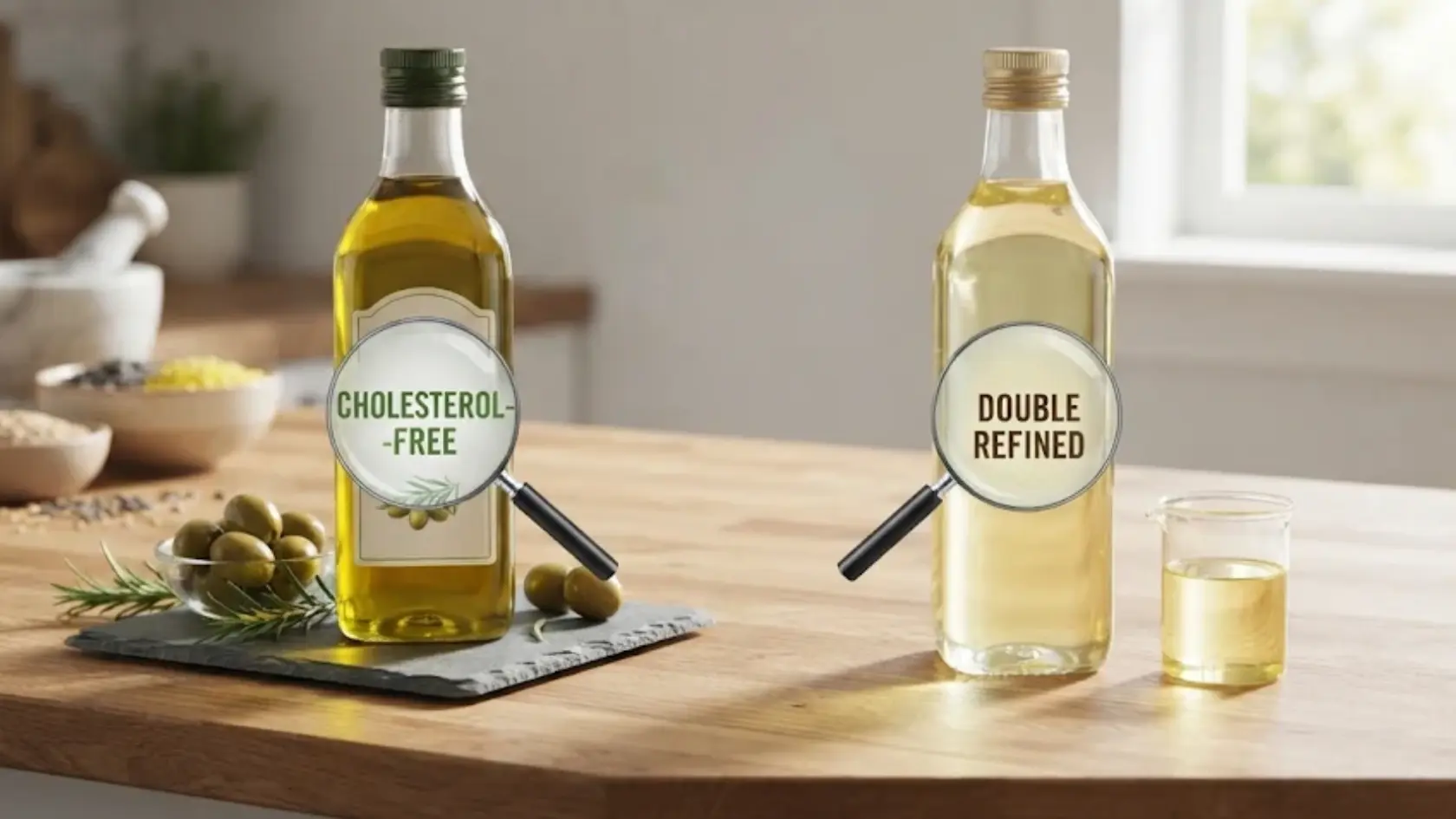
Refined oils with a high smoke point and a stable fat profile handle reheating best. Refined canola, sunflower, and soybean oils, as well as oil blends made for frying, are well suited to home deep frying. Unrefined oils like extra-virgin olive oil or cold-pressed oils are better for low-heat cooking and should not be reused for frying.
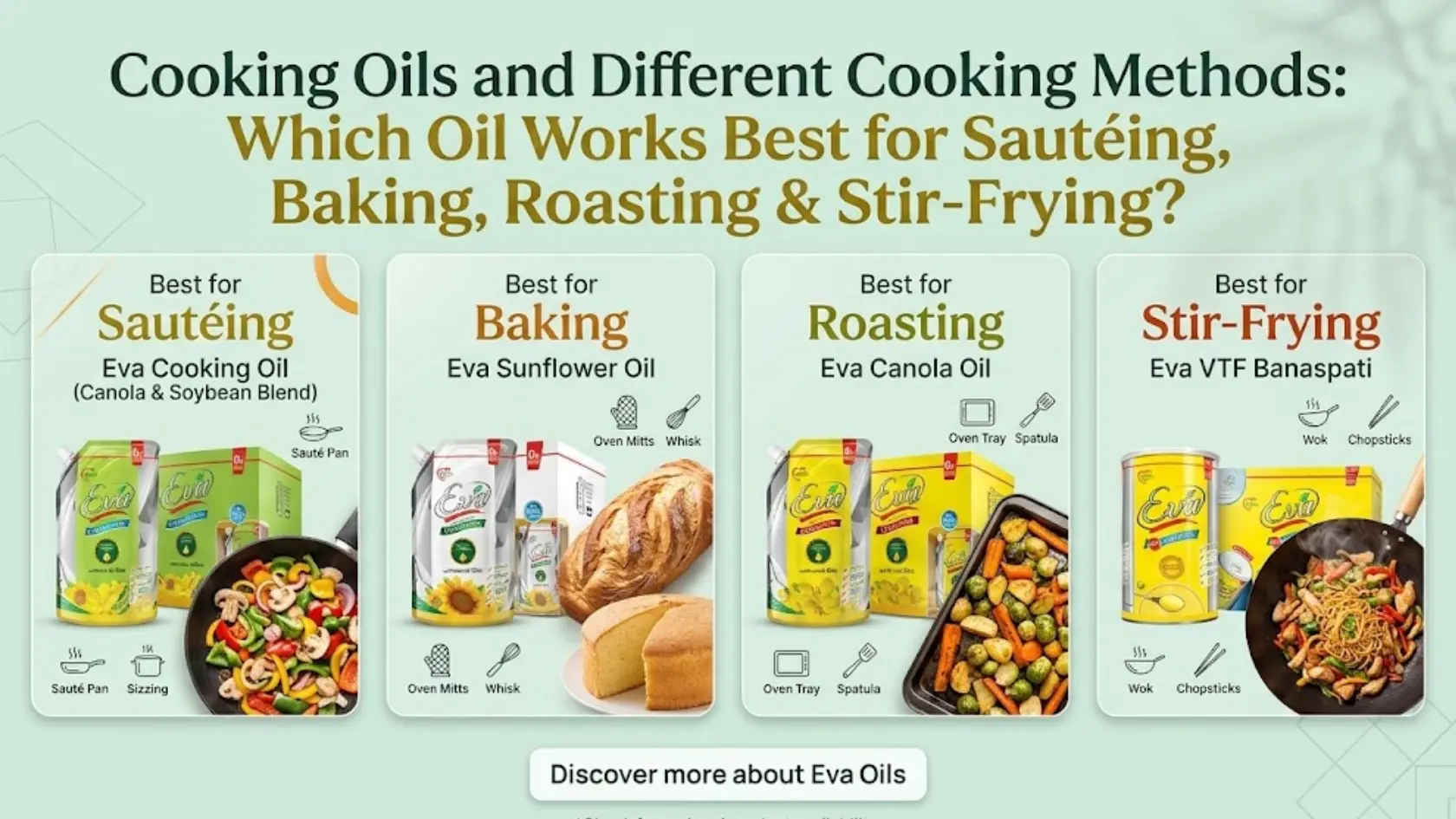
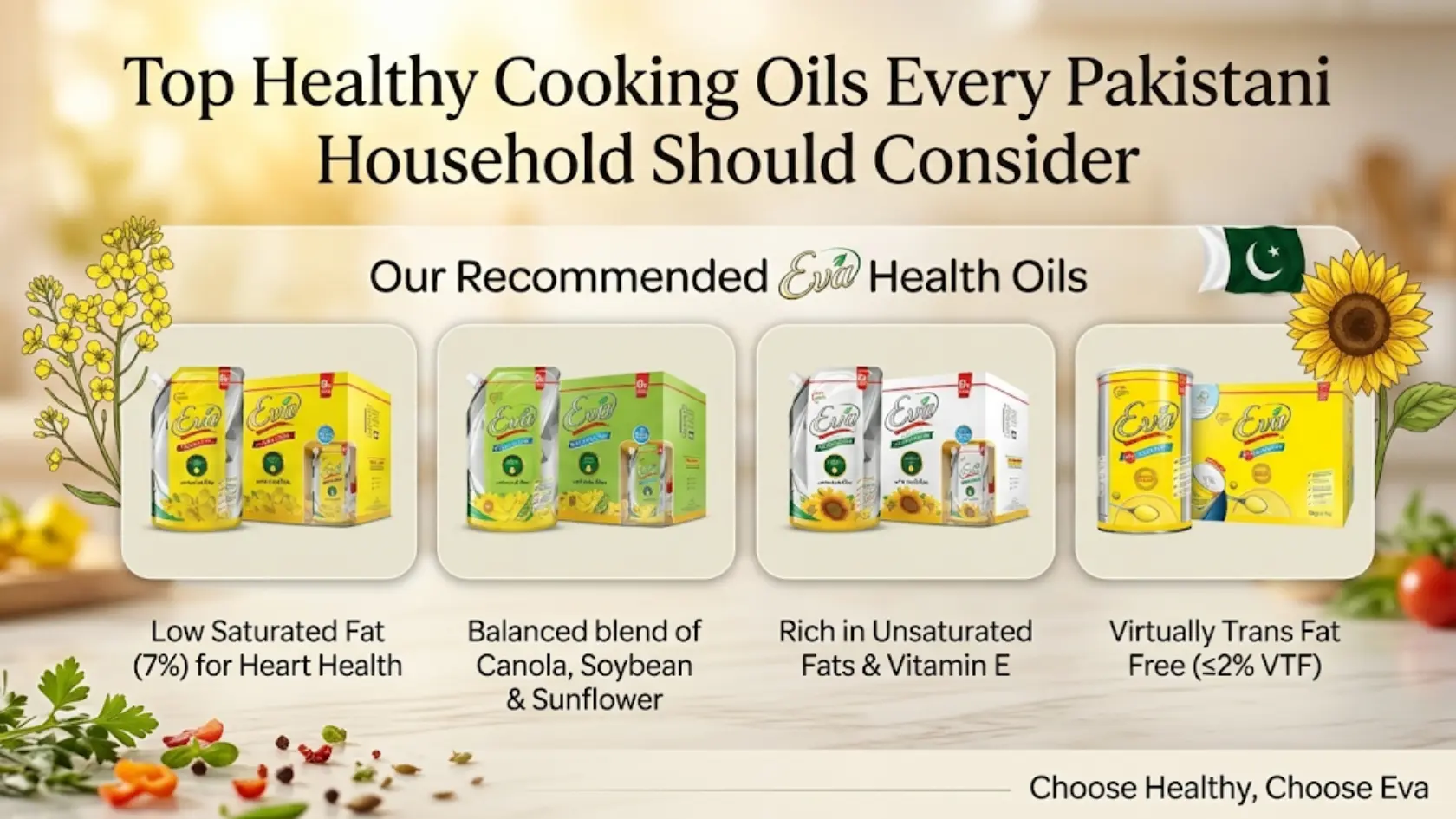
Here’s how Eva’s range fits different cooking needs:
- Eva Canola Oil: Contains only 7% saturated fat and is rich in healthy fats that may help support heart health. It is a strong choice for everyday frying and cooking.
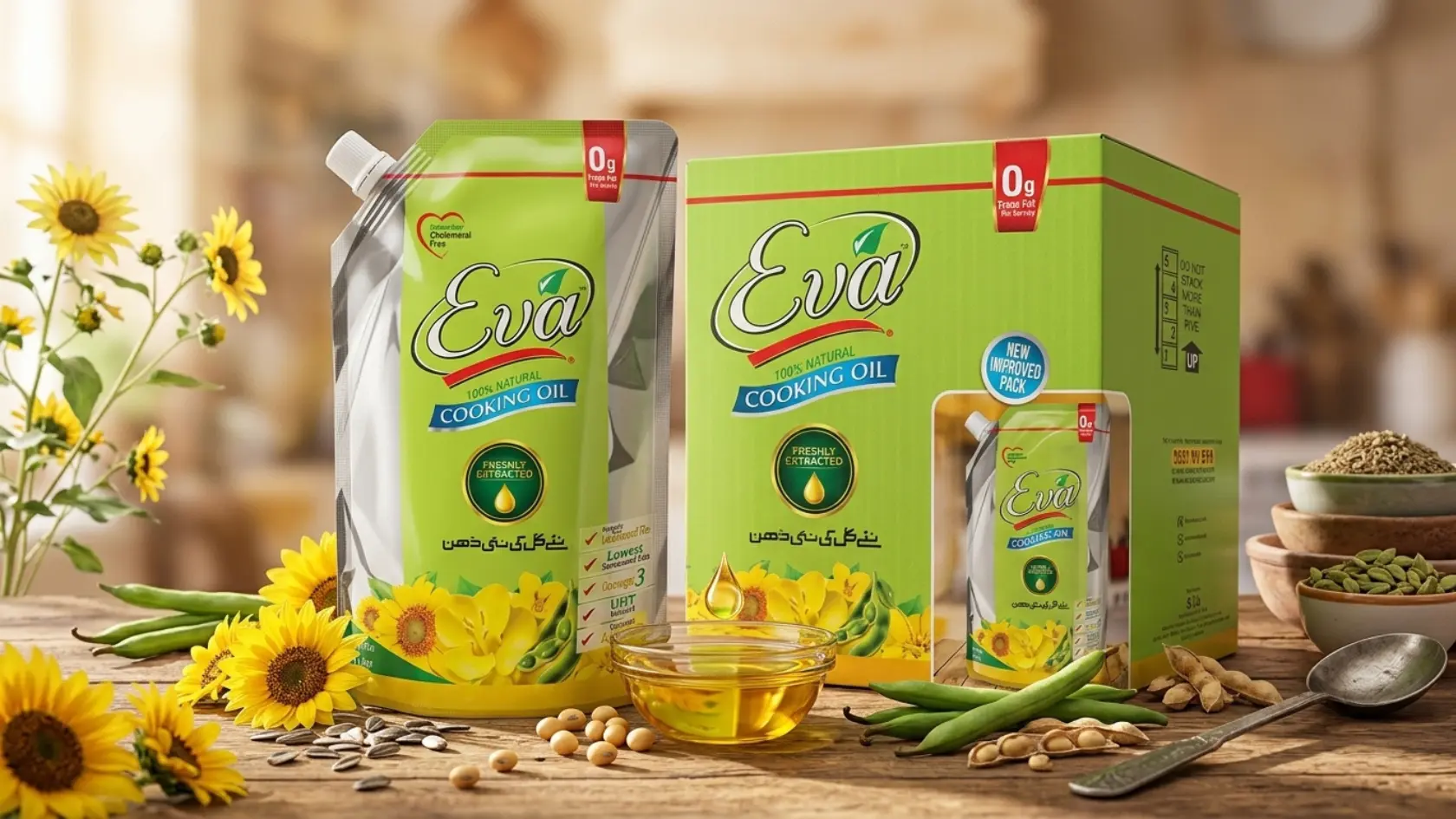
- Eva Cooking Oil: A balanced blend of canola and soybean/sunflower oils, offering a well-rounded nutritional profile for daily household cooking and frying.
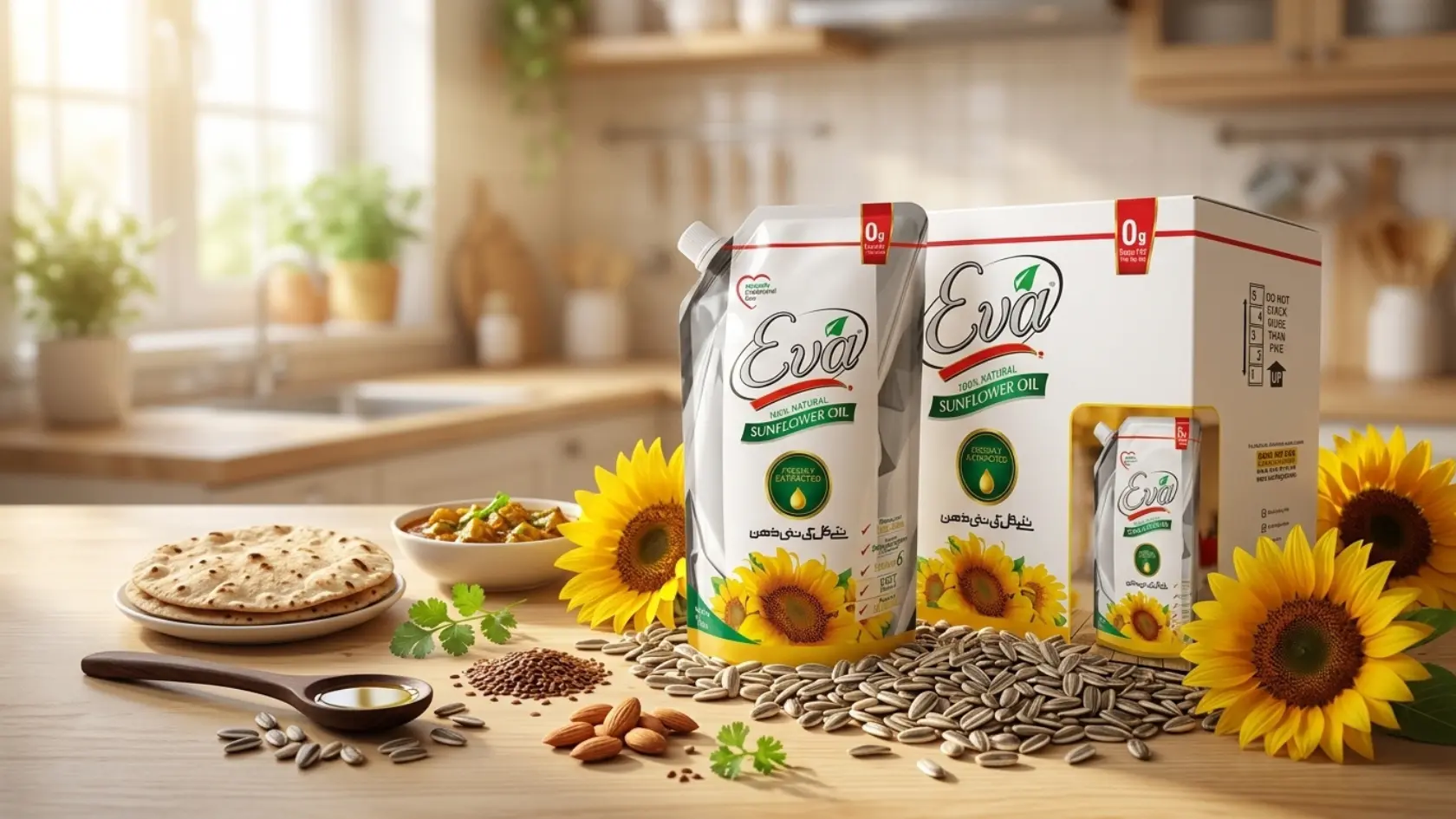
- Eva Sunflower Oil: Rich in unsaturated fats and Vitamin E (alpha-tocopherol), a natural antioxidant. It is ideal for light frying and everyday dishes.
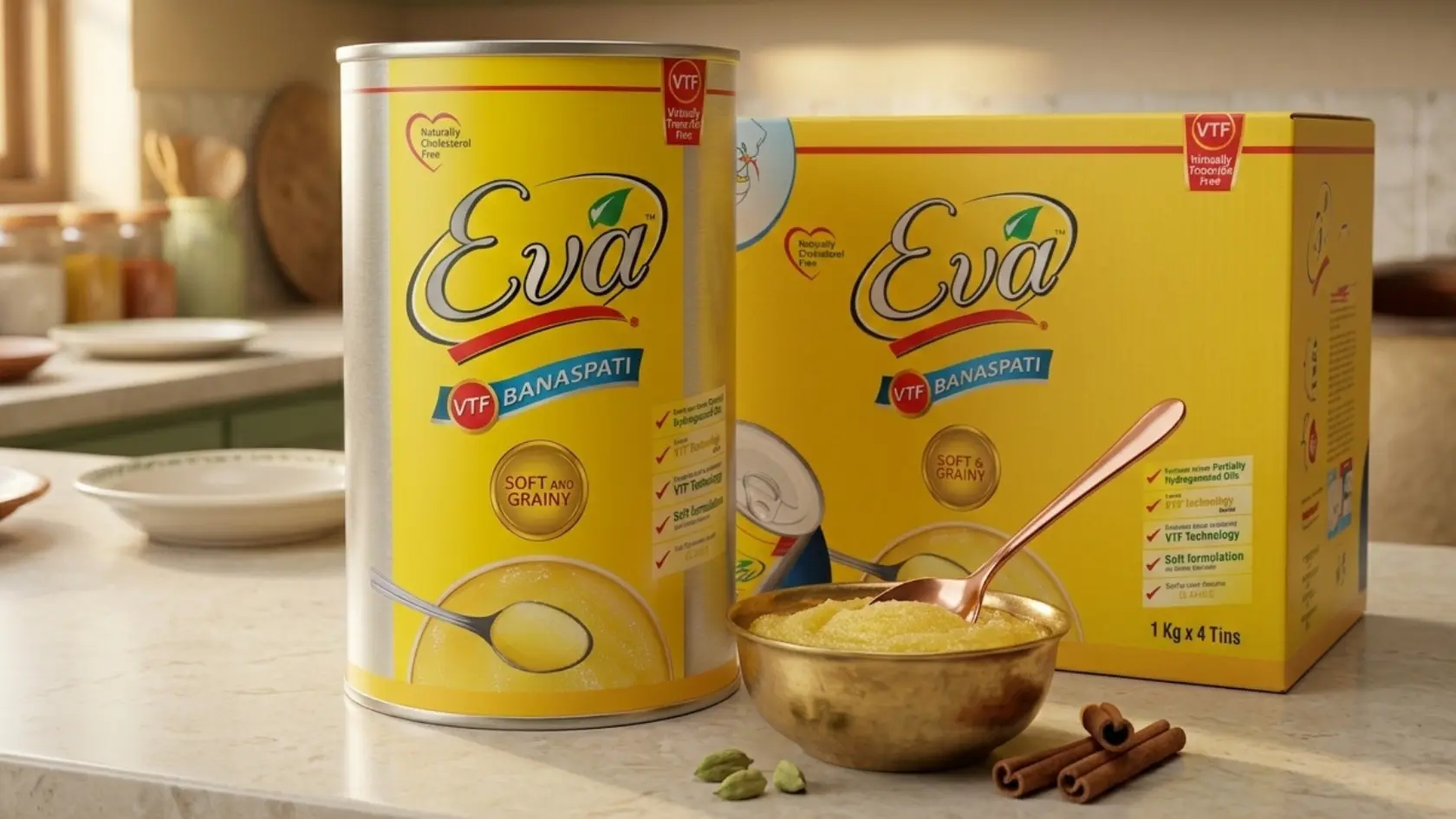
- Eva VTF Banaspati: A “Virtually Trans Fat Free” product containing 2% or less trans fat, making it a better choice for traditional recipes like parathas, halwa, and mithai that call for banaspati.
Whichever oil you choose, the reuse rules in this guide apply equally. Starting with a quality oil gives you a better base, but safe handling determines how long it lasts.
Approximate smoke points of refined oils:
| Oil Type | Approx. Smoke Point |
| Refined canola oil | ~204°C (400°F) |
| Refined sunflower oil | ~227°C (440°F) |
| Refined soybean oil | ~232°C (450°F) |
| Extra-virgin olive oil | ~190°C (375°F) |
Smoke points vary by brand, refining level, and how many times the oil has been used. Each reuse lowers the smoke point.
How to Dispose of Used Cooking Oil Properly
Never pour used cooking oil down the sink, drain, or toilet. It solidifies in pipes, causes blockages, and pollutes waterways. Instead:
- Let the oil cool completely.
- Pour it into a sealable, non-recyclable container (such as an old plastic bottle or tin).
- Seal it tightly and place it with your regular household waste.
- Where available, take it to a used cooking oil collection point. Many cities now recycle used oil into biodiesel.
Small amounts can also be absorbed with paper towels or sawdust before being thrown away.
Common Mistakes to Avoid
- Heating oil until it smokes
- Adding salt or seasoning directly to the oil (it speeds up breakdown)
- Frying wet or frozen food without patting it dry
- Topping up old oil with fresh oil
- Storing oil in the frying pan or kadhai uncovered
- Reusing oil after frying fish for sweet dishes
- Reusing oil more than 3 times, no matter how clean it looks
Let’s Explore Your Questions
Q1. How many times can you reuse cooking oil?
You can reuse cooking oil about 2 to 3 times for frying clean foods like potatoes or vegetables. For battered foods, meat, or fish, reuse it only once or discard it. Always strain and inspect the oil before each use.
Q2. Is it safe to reuse cooking oil?
Yes, it is safe to reuse cooking oil a limited number of times if you fry at the correct temperature, strain out food particles, store it airtight, and discard it at the first signs of breakdown such as dark color, a rancid smell, or smoking.
Q3. How do you know if cooking oil has gone bad?
Cooking oil has gone bad if it smells sour or rancid, looks dark and thick, foams excessively when heated, smokes at low temperatures, or makes food taste bitter or stale.
Q4. Can reusing cooking oil cause health problems?
Repeatedly reheated, degraded oil can form harmful compounds such as aldehydes, free radicals, and trans fats, which have been linked to inflammation and heart disease. Limited, careful reuse significantly reduces these risks.
Q5. How long can you store used cooking oil?
Strained used cooking oil can be stored in an airtight container in a cool, dark place for up to 1 month. Refrigerating it can extend its life.
Q6. Can you mix old and new cooking oil?
No. Mixing old oil with fresh oil causes the fresh oil to break down faster because degraded compounds speed up oxidation. Keep them separate.
Q7. Which cooking oil is best for deep frying and reuse?
Refined oils with high smoke points, such as canola, sunflower, and soybean oil or frying blends like Eva Cooking Oil, are best for deep frying and handle reheating better than unrefined oils.
Q8. Can you reuse oil after frying fish?
Oil used for frying fish should generally be discarded or reused only once, and only for frying other seafood, because it absorbs strong odors and degrades faster.
Q9. Should you refrigerate used cooking oil?
Refrigerating used cooking oil is optional but helps slow oxidation and extend shelf life. The oil may turn cloudy in the fridge, which is normal and clears at room temperature.
Q10. How do you dispose of used cooking oil?
Cool the oil, seal it in a non-recyclable container, and throw it in household waste, or take it to a used cooking oil recycling point. Never pour it down the drain.
Bringing It All Together
Reusing cooking oil is practical and economical when done correctly. Keep your frying temperature under control, strain and store the oil properly, limit reuse to 2 to 3 times, and discard it as soon as it darkens, thickens, smells off, or smokes early. Your oil’s quality starts at the moment you buy it, and choosing a trusted, refined oil gives you a healthier, more stable base for every meal. Good handling does the rest.
Cook Smarter with Eva
From everyday frying to traditional family recipes, Eva has an oil for every kitchen. Explore Eva Canola Oil, Eva Cooking Oil, Eva Sunflower Oil, and Eva VTF Banaspati to find the right choice for your family’s health and taste. Explore Eva Products, Find Eva Near You →